We inherited a legacy codebase that isn't secure and compliant
You are accountable for vulnerabilities in code your team never wrote, and clearing them costs engineering time you had committed elsewhere. HeroDevs secures the end-of-life dependencies on the versions they arrived on, without a rewrite nobody scoped.
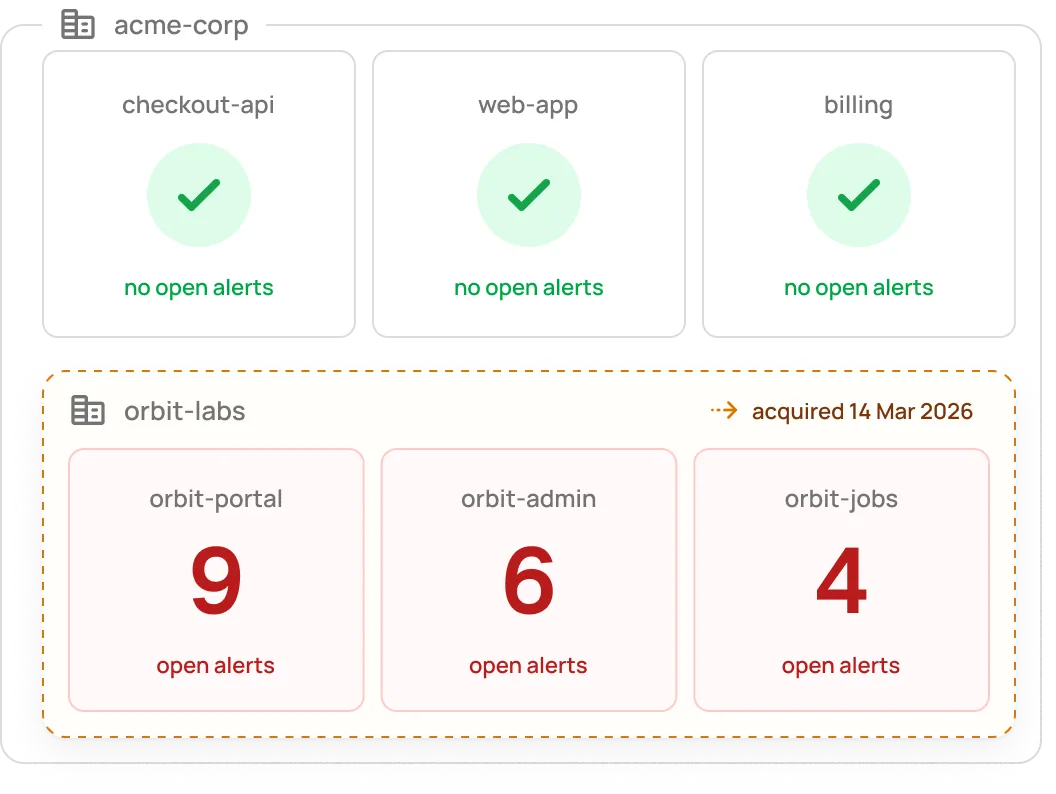
The due diligence report did not come with a remediation plan
The deal closed and the codebase is yours. Nobody on your team wrote it and the engineers who did may not have come with the deal. The due diligence report flagged end-of-life dependencies but came with no remediation plan. Those dependencies no longer receive security patches from maintainers, so nothing upstream will fix them.
Those vulnerabilities are now on your risk register, under your name, and clearing them competes with deadlines the business already committed to. None of that work existed when the quarter was planned and committed to.
What breaks when upstream patches stop
Security
CVE open, no fix
Compliance
No evidence to show
Roadmap & budget
Migration inserted, speed unplanned
.webp)
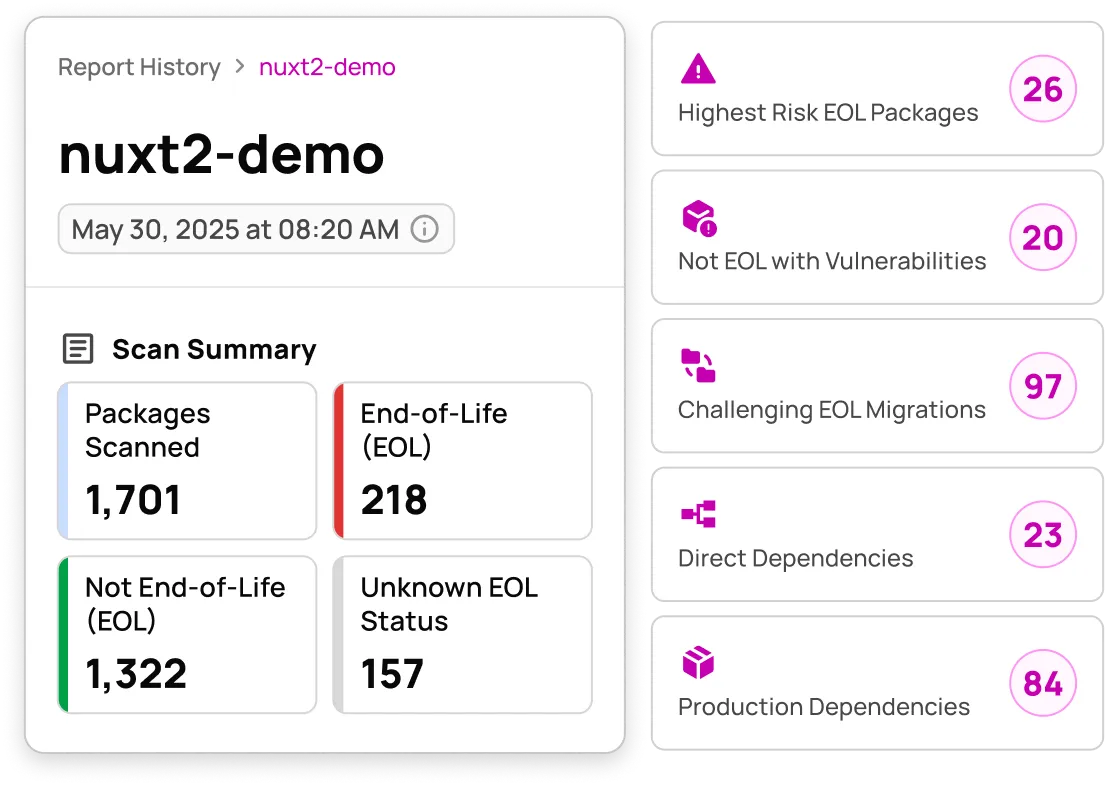
Find out what you actually inherited
Get a report of every end-of-life dependency across your repositories, direct and transitive.

The Problem
Every option puts the acquired codebase back on your engineers
Rewrite it onto your stack
The standard integration answer, and the most expensive one. You are rebuilding a product you already paid for, on a timeline that delays every synergy the deal was justified on, using engineers who were meant to be building something else.
Defer it until after integration
Reasonable on paper, except the vulnerabilities do not wait for your integration plan, and they are already on your register. Whatever the acquired team was doing about them, they are now your findings to answer for.
Have AI do it
Fast, and increasingly expected, because a model will read code nobody on staff understands and return a fix in minutes. But independent research finds nearly half of AI-generated code introduces new vulnerabilities, and an unreviewed patch leaves an open question about who answers for it. On code your team did not write, nobody can close that question.
Reference: https://www.veracode.com/blog/spring-2026-genai-code-security/
The Solution
You do not need to understand the codebase to secure it
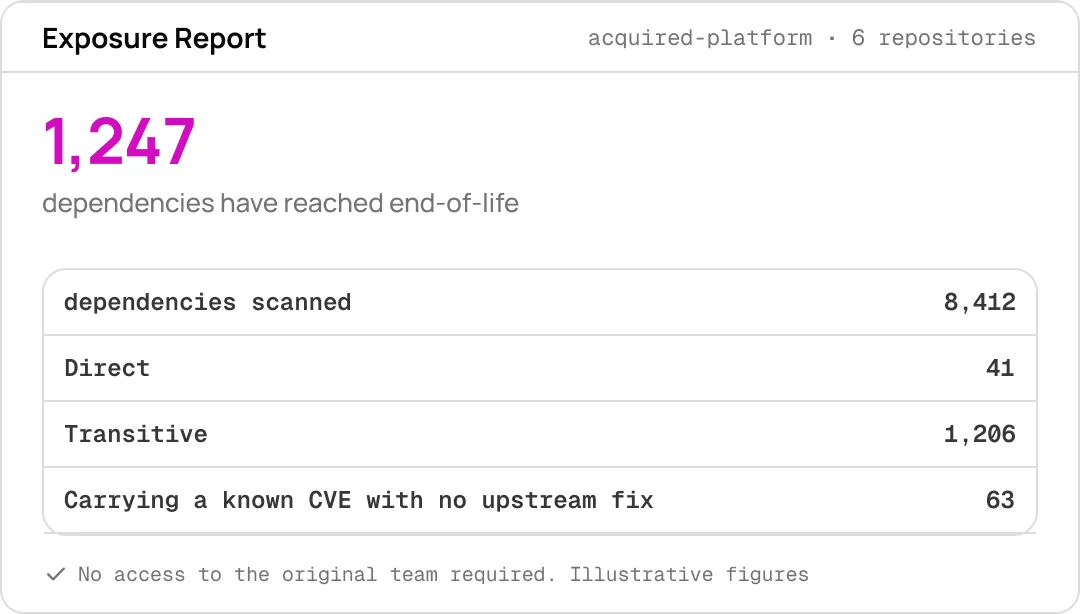
Find out what you inherited
Scan the acquired repositories and get an inventory of every end-of-life dependency, direct and transitive, with no involvement from the original team.
Secure the acquired codebase on the versions that came with the deal
Drop-in replacements, engineer-built, so the application keeps running as acquired rather than being rebuilt under a forced migration.
Support does not expire.
New CVEs are patched under an SLA, for as long as you keep using the software.
Why HeroDevs?
19M+
package versions tracked
1,000+
vulnerabilities remediated
1,000+
enterprise customers secured by HeroDevs

We maintained our security posture without compromising our strategic roadmap, all while achieving substantial cost savings compared to a full migration.
Markus Wolf, Architect @ Statista
An inventory of every end-of-life dependency you inherited, and the secured version that replaces it
.webp)
What engineering and security teams ask
Get answers to some of our most commonly asked questions.
Of course, if you can't find the answer you're looking for, feel free to contact us.
Something not covered here? Talk to an expert.