There’s a CVE and no patch available because the version is end-of-life
The fix upstream lives several major versions ahead, if it exists at all. HeroDevs builds a secured version of the release you are already running, so the finding closes without an upgrade.
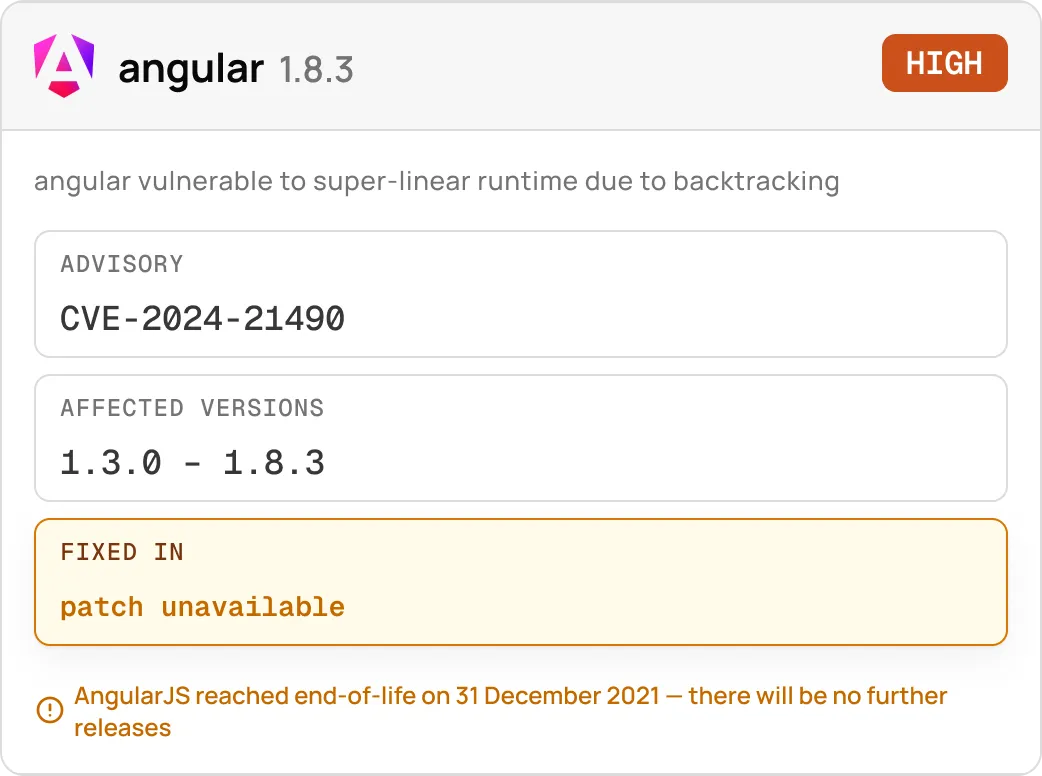
There is no patched version to move to
Your scanner flags a CVE against a package in production. You go looking for the patched release and there isn’t one. The release line you are on reached end-of-life, and the advisory names a fixed version two or three majors ahead of where you sit.
So the finding stays open. It reappears on every scan, it shows up in the next audit, and it lands in the next security questionnaire a customer sends you. Nothing about it resolves on its own, because the party who would normally resolve it has moved on.
What breaks when upstream patches stop
Security
CVE open, no fix
Compliance
No evidence to show
Roadmap & budget
Forced migrations that risk the roadmap

Already know the CVE?
Search the vulnerabilities HeroDevs has remediated to see whether a secured version of your package already exists.
The Problem
Every path out costs more than the fix should
Upgrade to the version that has the fix
The patched release is a major version ahead, so this is a migration rather than an update: breaking changes across every call site, other packages pinned to the major you are leaving, and a full regression pass. Weeks of engineering, scoped and delivered to close one security finding.
Patch it yourself
Fork the project, backport the fix, and maintain that fork indefinitely. You now own code nobody outside your team reviews, and the next CVE on the same package is also yours to handle.
Generate the fix with AI
Fast, and increasingly common. Independent research finds that nearly half of AI-generated code introduces new vulnerabilities, and an unreviewed patch leaves an open question about who answers for it if it misses the vulnerability or breaks production
Reference: https://www.veracode.com/blog/spring-2026-genai-code-security/
The Solution
HeroDevs maintains the release line the project left behind
We maintain a secured release inside the line you already run
HeroDevs engineers backport security fixes to a supported release in your version line, rather than asking you to move to the current major.
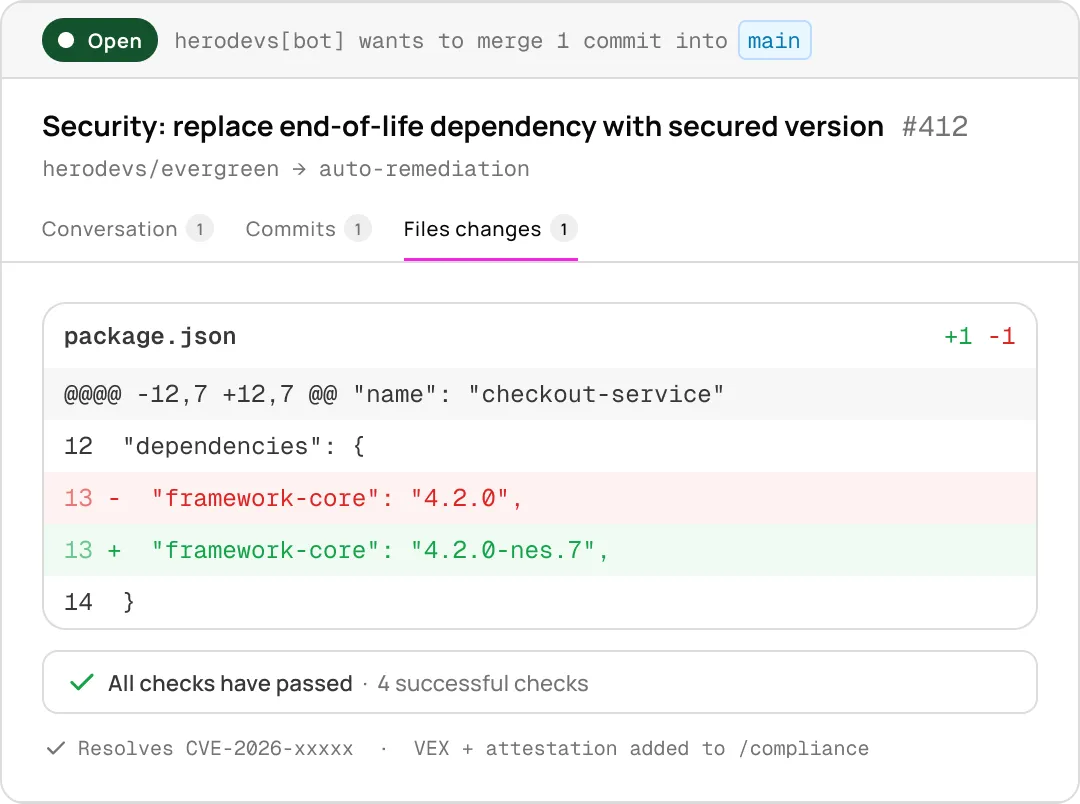
You change the dependency reference
The replacement is API-compatible, so application code does not change. If you sit behind the supported release, you bump up to it first, which stays inside the line you already run.
New CVEs keep getting patched
Covered packages fall under the NES 14-day CVE SLA, for as long as you run the software.

Why HeroDevs?
19M+
package versions tracked
1,000+
vulnerabilities remediated
1,000+
enterprise customers secured by HeroDevs

“Beyond the technical benefits, HeroDevs' solution delivered significant business value. We maintained our security posture without compromising our strategic roadmap, all while achieving substantial cost savings compared to a full migration.”
Markus Wolf, Architect @ Statista
A pull request, and the evidence to close the finding
.webp)
What security and compliance teams ask
Get answers to some of our most commonly asked questions.
Of course, if you can't find the answer you're looking for, feel free to contact us.
Something not covered here? Talk to an expert.