


Dead Software Is the Vulnerability Your Scanner Misses. EOLDS Catches It — Free.
Introducing the End-of-Life Data Set (EOLDS), free End Of Life detection across 12 million+ packages.
.png)
Your SCA catches CVEs. It flags license issues. It maps your dependency tree. But it was never built to answer the most basic question: is this software still alive across my tech stack?
Today we're launching the End-of-Life Data Set (EOLDS), a free tool that detects end-of-life software and maintainer abandonment across 12 million+ packages in npm, PyPI, Maven, NuGet, Cargo, Go, RubyGems, and Packagist. It's the layer your scanner is missing.
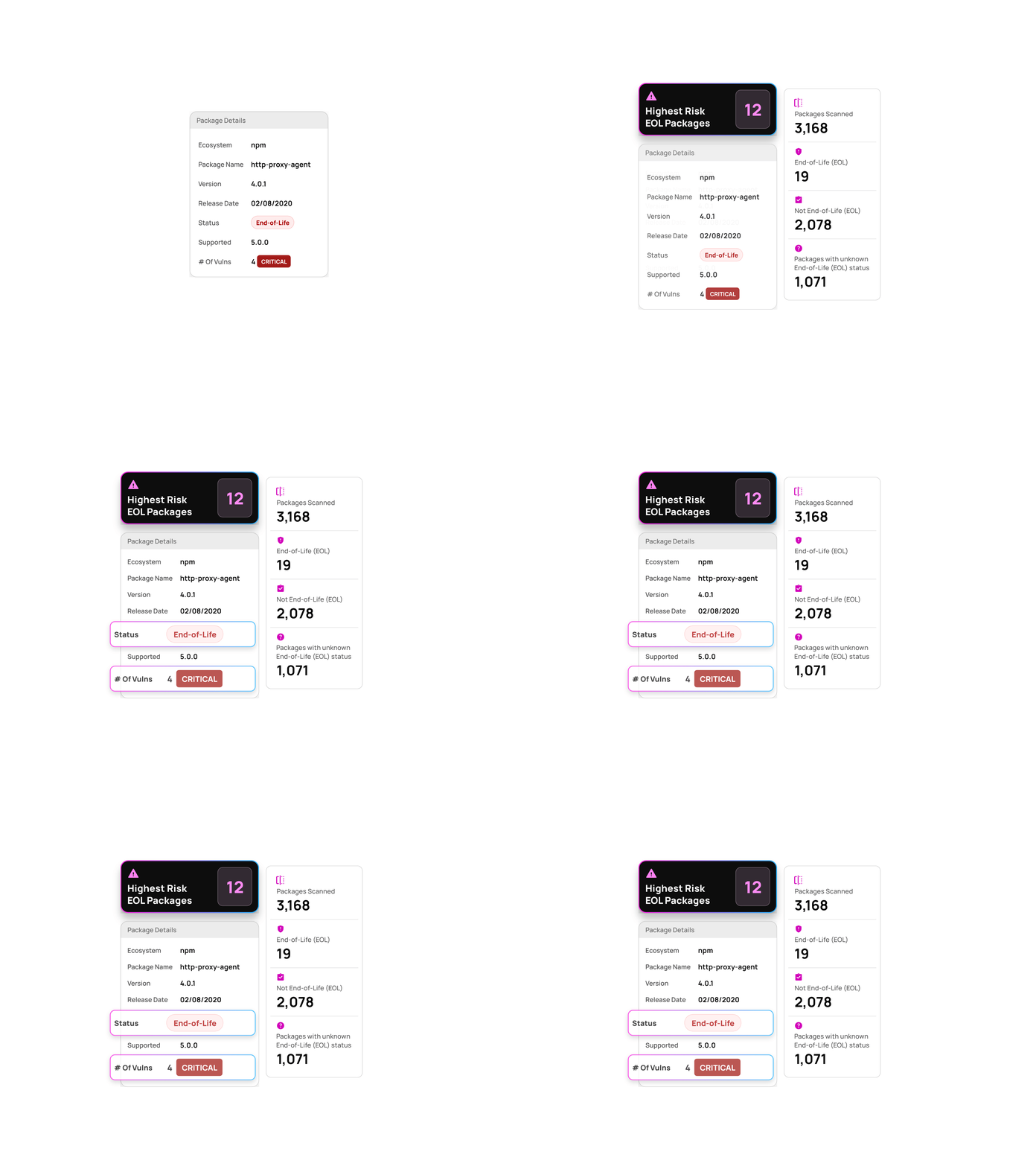
The problem
When a package hits end-of-life, the next CVE that lands will never get patched. There’s nobody left to write the fix. Sonatype calls these “forever vulnerabilities” — and our joint research found 81,000+ package versions that are both end-of-life and unpatchable today.
But it’s not just official EOL. The bigger problem is maintainer abandonment — projects where the developer just disappeared. No announcement, no goodbye commit, just silence. Still getting downloaded. Still in your dependency tree. Still a ticking clock.
How EOLDS works
We built EOLDS using heuristic analysis and machine learning to detect both official EOL declarations and unofficial maintainer abandonment at scale. Our models look at commit velocity, release cadence, issue response time, download trends, and registry metadata to catch the packages that died without telling anyone.
This is the layer that sits underneath your SCA. Your scanner finds bugs with fixes. EOLDS finds software that will never get fixed.
What you can do with it
- See what’s dead in your stack before your auditor does
- Prioritize by actual risk — days since EOL, versions behind, migration effort
- Catch abandonment early — before the next Log4Shell lands in a package nobody’s maintaining
- You can’t patch what you can’t see — EOLDS sees it
- Share reports across teams — give security, engineering, and compliance a single source of truth on EOL exposure
-
It’s free. Try it now.
We built EOLDS because this data didn’t exist anywhere. Now it does.
📄 Docs


Resources
View All Articles


.png)